
For life sciences
See the whole life
behind the diagnosis.
People use Care Journal to bring their own story together: every clinic, every lab, and every day in between. When they choose to share it, you get a history deep enough to build real evidence on.
Consented at source, straight from the person it belongs to.
Patient entry · day 9
“Really queasy since I moved up to 1 mg, and I cannot face food in the mornings.”
Linked to the record
MedDRA LLT
Nausea
- Onset
- After the dose change
- Pattern
- Worse in the mornings
- Severity, patient-reported
- Moderate
Verbatim, retained
“really queasy, cannot face food in the mornings”
Onset day 9 · resolved day 14
Why it’s different
The richest months are the ones between appointments.
Claims capture what got billed. An extract captures one health system. Care Journal captures the days in between, in the person’s own words, dated as they happened.
Twenty-one days between appointments. Your dataset sees two of them.

What you’re buying
One source, and it’s
the person themselves.
That single fact is what gives the history its reach, keeps the consent clean through diligence, and puts the events nobody billed for inside your file.
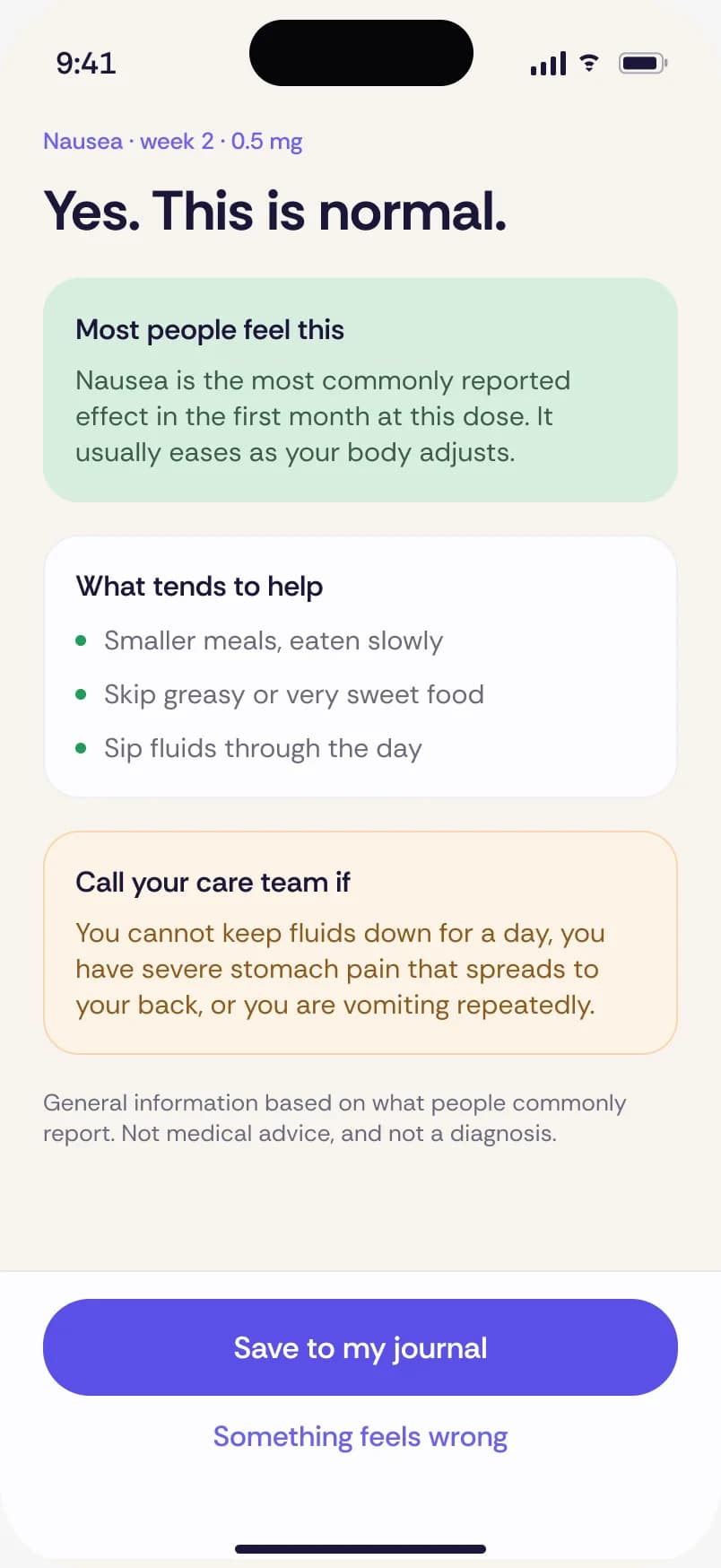
Consented at source
Every record arrives from the person it belongs to, permissioned for research and traceable to the moment they agreed.
The whole history
Records retrieved from every provider they’ve seen, plus what they logged in between. Not the one system that happens to sell data.
Already coded
You get CTCAE terms and MedDRA LLT codes on the entry, with the verbatim text still attached. No mapping project on your side.
Seven languages
Populations your studies usually exclude for language are in this one, in their own words.
How we get it
People build it because they want it.
The app is free and genuinely useful, so people bring their own records in and we go and retrieve the rest. Sharing with research is a separate choice they make later, for a study they can name.
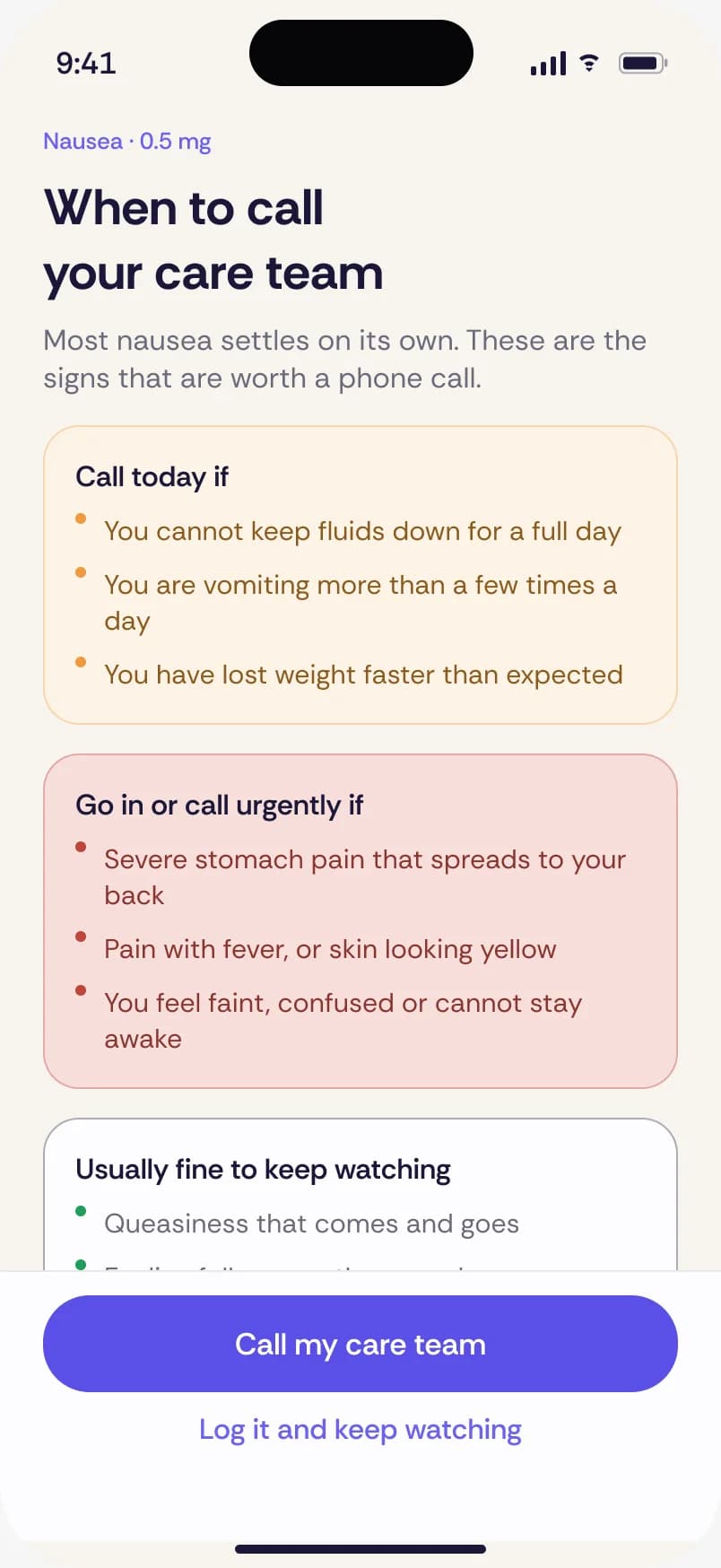
We ask, they answer
You mentioned the fatigue got worse after cycle three. Did anything change that week?
I started the new anti-nausea tablet on the Tuesday.
What you can buy
Query the history, or grow your own cohort.
Same source either way. The choice is whether you want the care that already happened, or a population you recruit and follow forward.
Care Journal Archive
Query the history that exists.
- Structured fields plus the notes behind them
- Cohort-matched to your inclusion criteria
- De-duplicated across systems, so one person counts once
- De-identified and analysis-ready in days
Care Journal Cohort
Recruit the cohort and follow it.
- Recruit and consent the exact population you need
- Your own ePROs, on your schedule
- Prospective follow-up, month after month
- Dashboards while it runs, exports when you need them
Participants see who you are before they agree, can withdraw whenever they like, and their consent expires after a year unless they renew it.
Who uses it
Built for the teams who prove it.
Medical Affairs, RWE and HEOR, Market Access, Commercial Strategy and R&D. Same source, different question depending on where your product is.
Registries
Three cohorts we’re building now.
Where a whole therapeutic area is missing the same thing, we build a registry around it and recruit for it directly.
Why real time is the accurate one.
“Real time, with a Likert scale, or the patient reported each day, is going to give you the most accurate real time data.”
Charles Balch, MD · Burna AI advisory board · former Executive Vice President and CEO, ASCO
Questions we get
What people ask us first.
Ask us anything, including the hard ones. We answer those the same way.
What makes this different from the RWD vendors we already use?
Ours comes straight from the person it belongs to, who went and collected it because they wanted it. That is what gives it the reach, and why the parts a claim never sees are sitting in it.
Where does the data actually come from?
People use Care Journal for their own reasons. It pulls their records in from the clinics they’ve been to, and they add what’s missing. Later, separately, they can choose to let a de-identified copy go into research.
Will the consent survive a diligence review?
Consented at source, per study, with you named before anyone agrees. People can withdraw whenever they like and it renews yearly by choice. Every record traces back to the moment its owner said yes.
How big is the cohort?
Growing every week. We’re early, and we would rather show you precisely where it stands today and let you judge whether it carries your question.
Do we get the notes, or just structured fields?
Both. Diagnoses, labs, meds, vitals and payer detail, plus the clinical notes, pathology and discharge summaries parsed. And what the person wrote themselves between appointments, kept verbatim.
Who uses this inside a company like ours?
Medical Affairs, RWE and HEOR, Market Access, Commercial Strategy and R&D. Usually it starts with one team’s question and the file ends up getting passed around.
Send us your inclusion criteria.
We’ll run them and show you exactly what comes back, so you can judge the fit yourself.